
Field & Record

No. 12 · February 2026

Investigation · Water

Eleven Years
Above Ashcombe

Verrow Water’s treatment works at Marlow Bank has discharged into the River Sennet in dry weather since 2014. The company’s own returns record 3,412 hours of it. We spent fourteen months on the riverbank, in the permit archive and in a laboratory in Bristol, and found a pipe that was never supposed to be open.

Reported over fourteen months

Summary

What we found

Four things this investigation establishes, each of them from a document, a return or a laboratory result rather than from an account given to us.

  1. 01

    3,412 hours of dry-weather discharge

    Verrow Water’s own event-duration returns record 3,412 hours of discharge from the Marlow Bank storm overflow between January 2019 and December 2024 on days the Met Office logged no measurable rainfall at Ashcombe. That is 142 days of continuous running, in dry weather, from a pipe permitted to open only in wet.

  2. 02

    A permit read the company’s way for eleven years

    Permit EPR/QB3947TT allows discharge “during and immediately following rainfall”. From September 2014 Verrow Water applied that phrase to a rolling 72-hour window after any rain of 2mm or more — an interpretation the regulator confirmed to us in writing it had never agreed, and had never been asked to.

  3. 03

    Ammonia at eleven times the consented limit

    Of 214 samples we drew at six points over nine months, 61 exceeded the permit’s ammoniacal nitrogen limit at the point of discharge. The highest, taken at 06:40 on 14 March 2025 after eleven dry days, measured 8.4 mg/l against a consented 0.75 mg/l.

  4. 04

    Nobody downstream was ever told

    Ashcombe Town Council, the two schools that swim at Coldwell Reach and the Sennet Angling Club have never received notice of a discharge. Verrow Water is under no duty to give one. It also holds no record of ever having done so, in eleven years and 4,118 logged events.

Stage one

The outfall

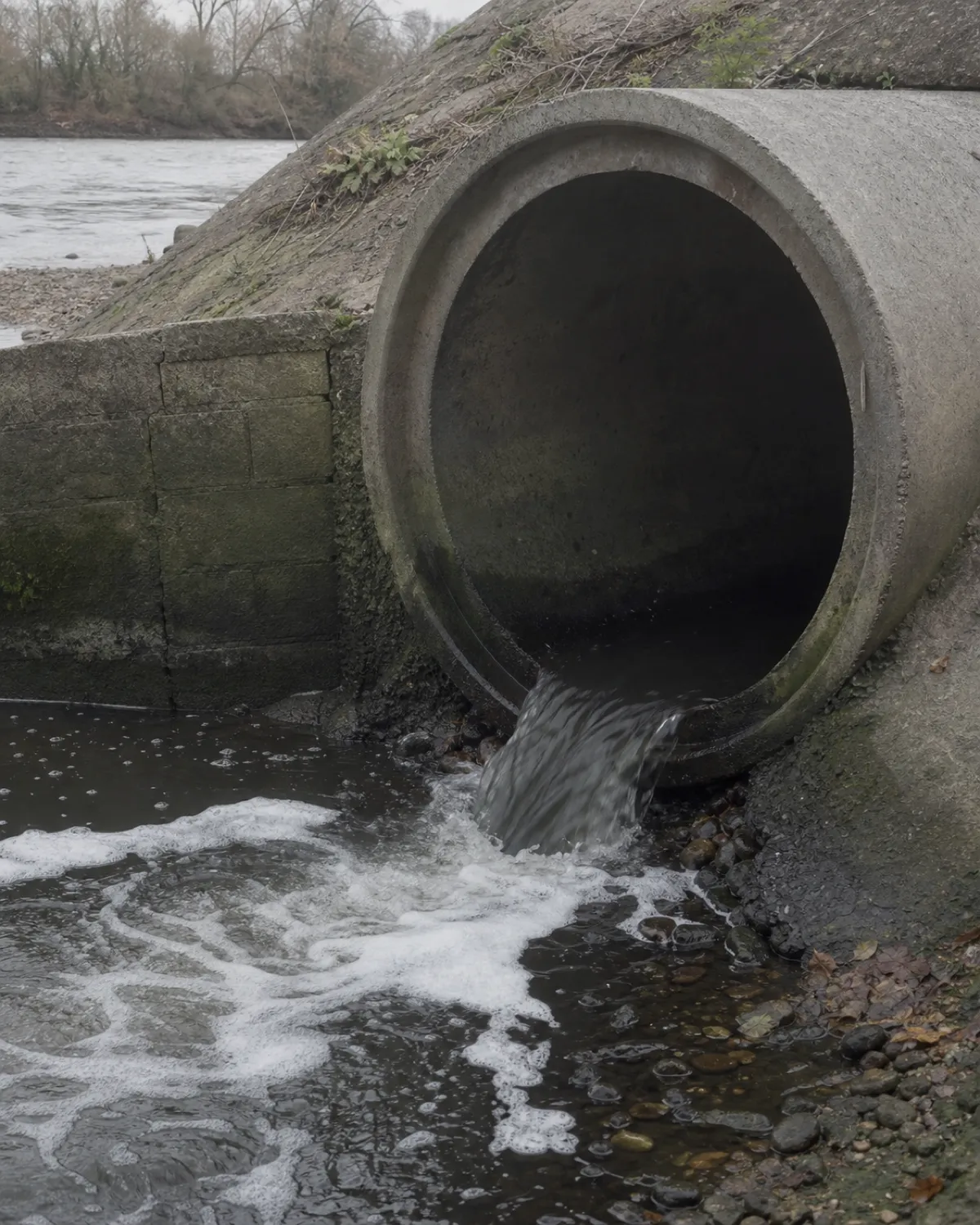
A 1.2 metre concrete outfall pipe set into a river bank, grey water running from its mouth into the shallows.
Fig. 1 The Marlow Bank outfall, 14 March 2025, after eleven days without rain.
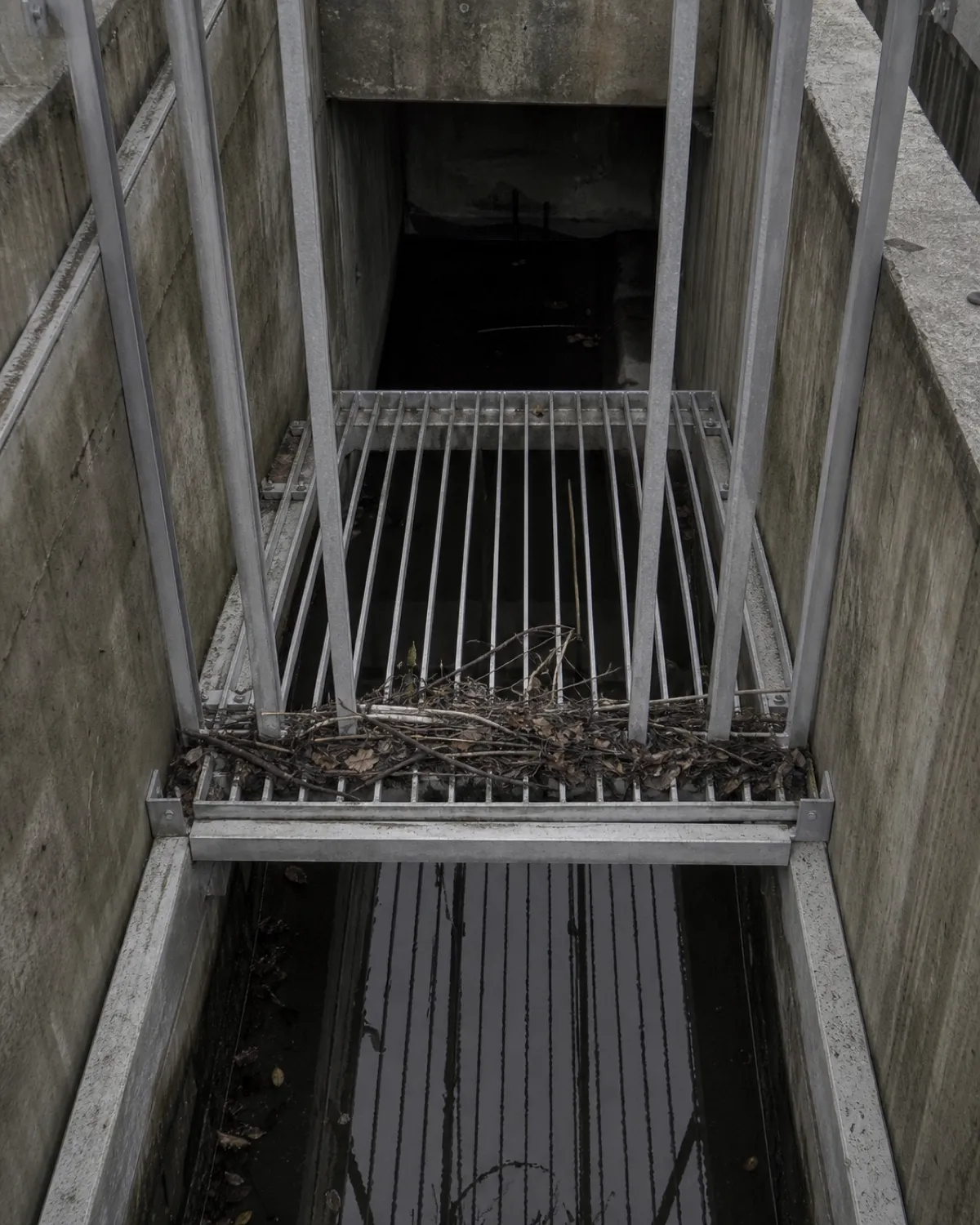
The screen chamber above the outfall, a steel grating over a channel of standing water.
Fig. 2 The screen chamber above the outfall. The overflow weir sits behind the grating.
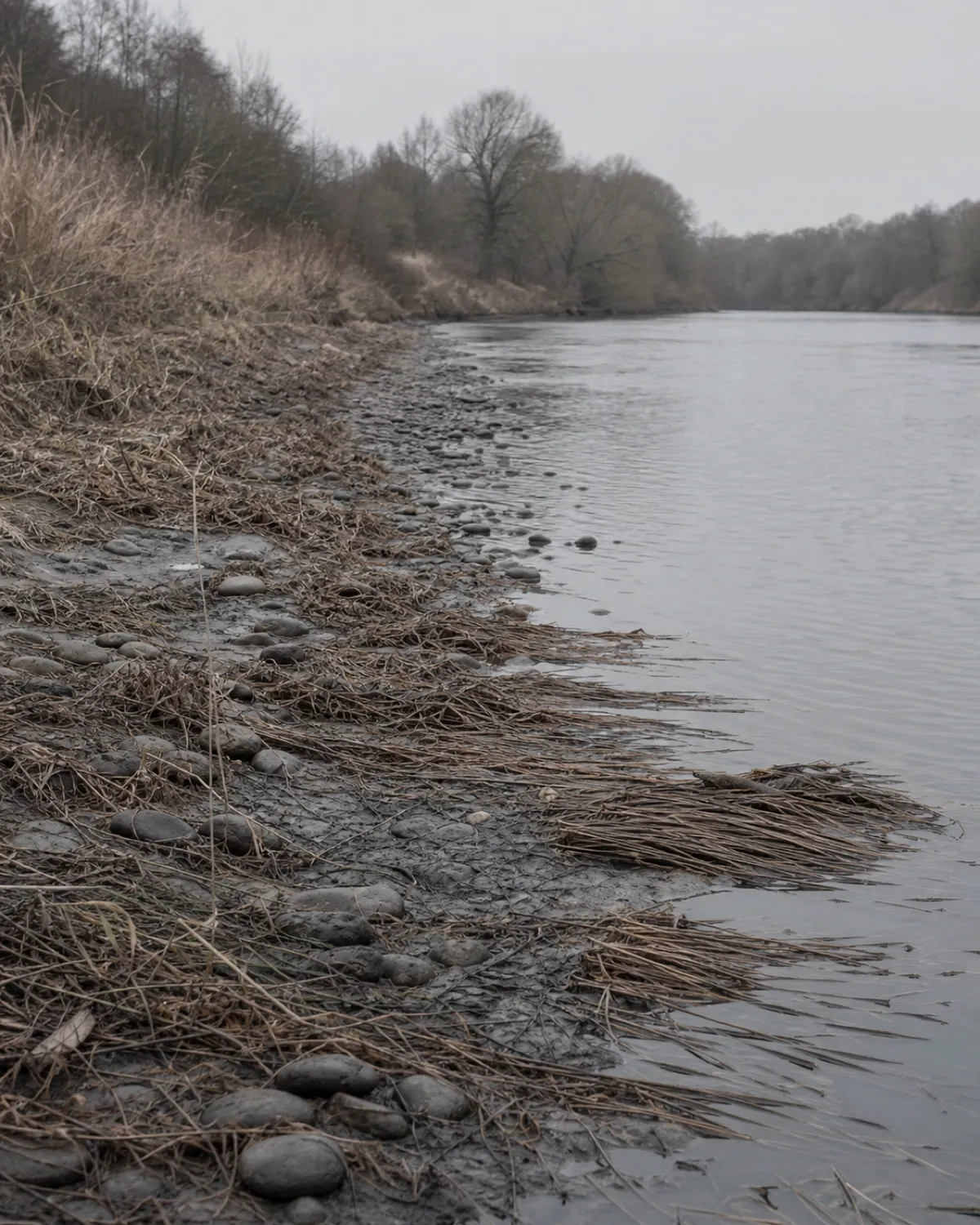
The north bank of the River Sennet downstream of the outfall, reeds flattened and grey silt on the stones.
Fig. 3 Forty metres downstream. The grey silt line marks the plume’s usual reach.

Step 01

A pipe under the bank

The outfall is a 1.2-metre concrete pipe set into the north bank of the Sennet, four hundred metres upstream of the footbridge at Marlow Bank and nine kilometres above Ashcombe. It is not signed. It appears on no public map of the river, and the nearest thing to a public record of it is a six-digit reference in a spreadsheet the company files once a year.

We first stood in front of it on 2 December 2024, on a dry Monday afternoon, and it was running.

Step 02

Only after rain

Behind the grating is a weir. When the works takes more flow than it can treat, the excess spills over that weir and out through the pipe — a storm overflow, legal, and in a wet enough hour the alternative to sewage backing up into houses in the valley.

Condition 3.2 of the site’s permit allows this “during and immediately following rainfall”. What the condition does not do, and what eleven years of correspondence shows nobody ever pinned down, is say how long “immediately following” lasts.

Step 03

Eleven years of returns

Verrow Water answered that question itself, in an operating note dated 11 September 2014: 72 hours after any rainfall of 2mm or more. Set against Met Office records for the Ashcombe gauge, that window covers most of a British year.

Matching all 4,118 logged events to daily rainfall gives the figure at the top of this piece: 3,412 hours of discharge on days with no measurable rain at all.

Stage two

What the samples showed

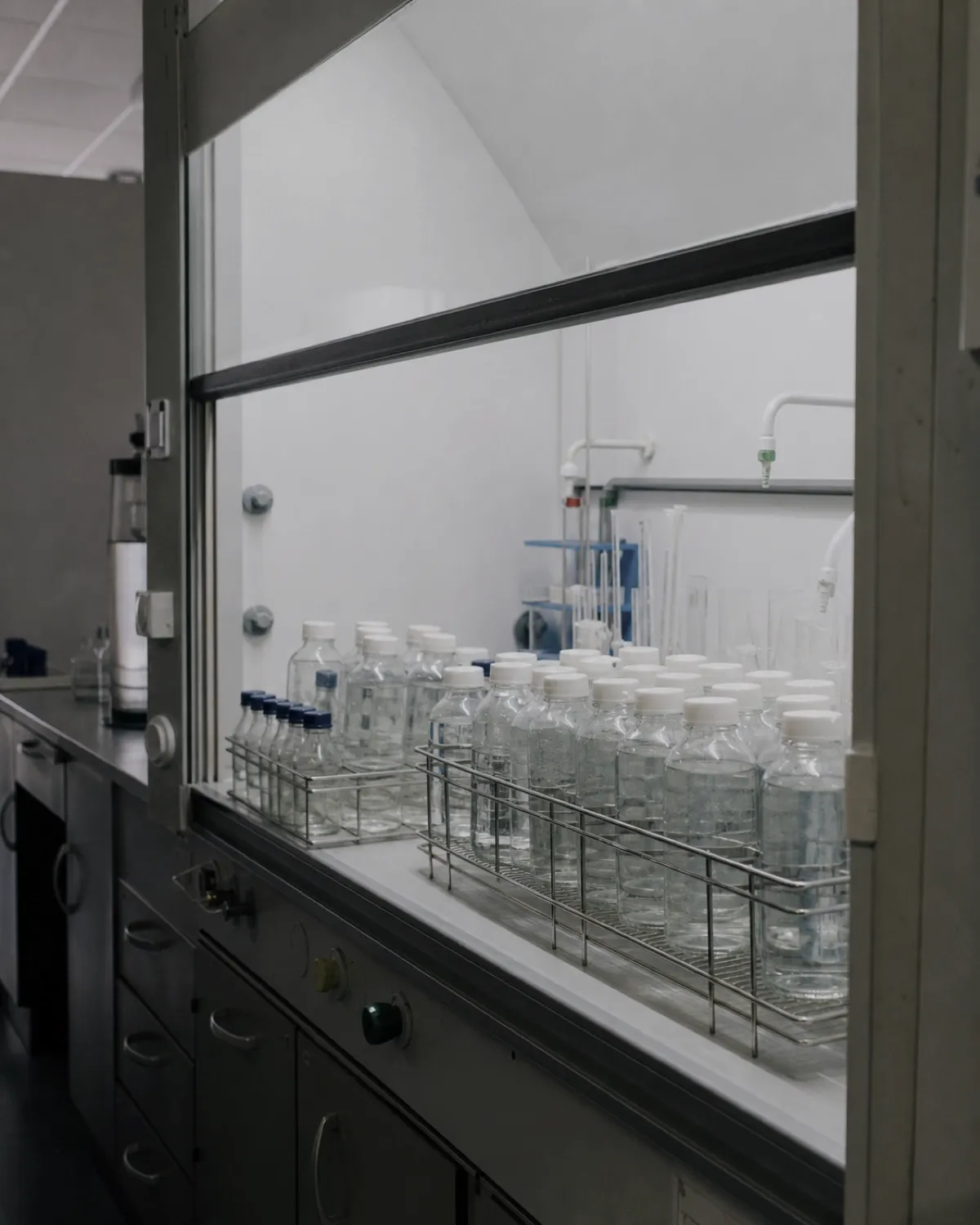
A laboratory bench at Kestrel Analytical, racks of sample bottles under a fume hood.
Fig. 4 Kestrel Analytical, Bristol, where all 214 samples were tested.
Fig. 5 Drawing a sample at Coldwell Reach, 14 March 2025, 06:40. Bottle 118 of 214.
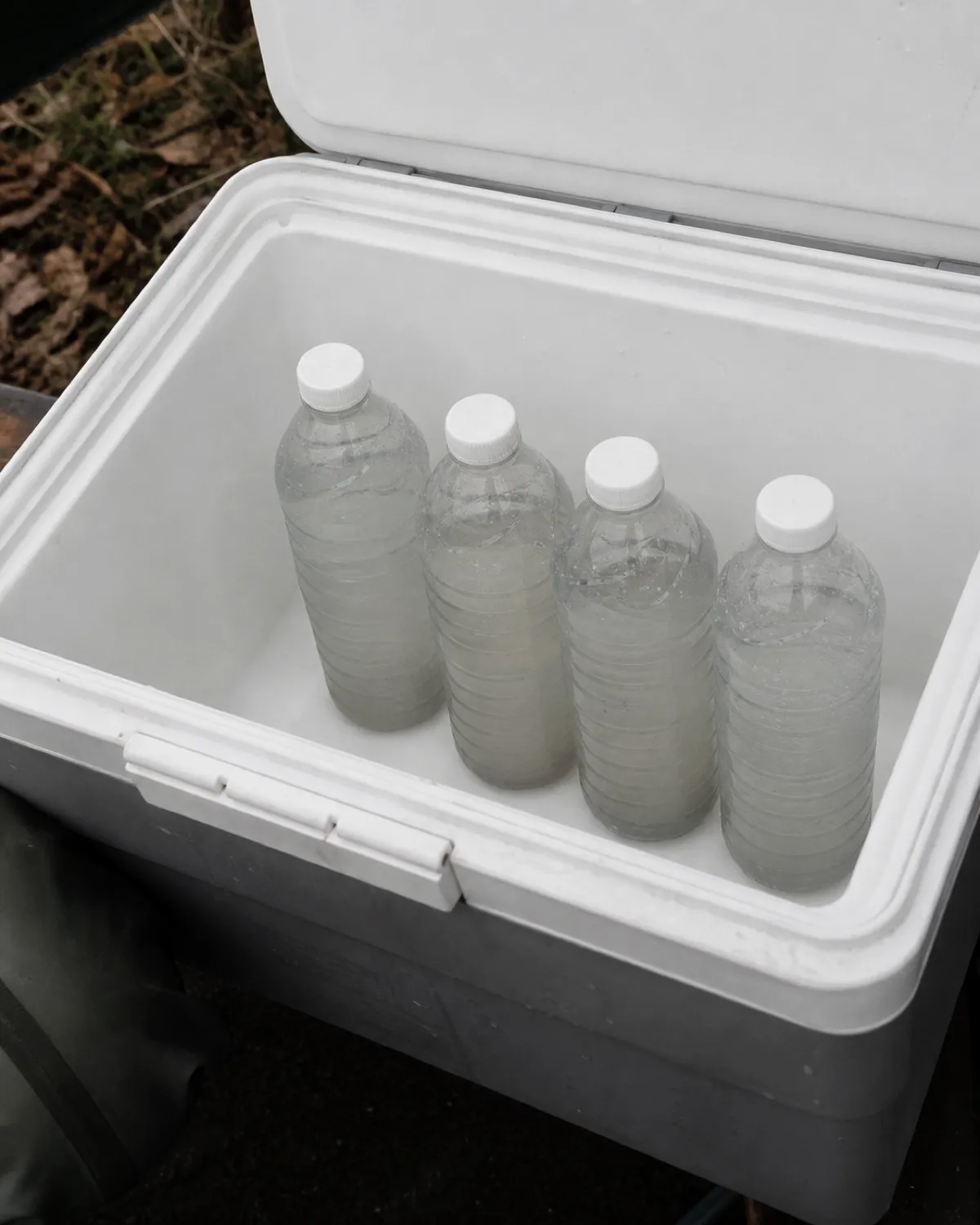
Four sample bottles standing in a cool box, the water in them visibly grey.
Fig. 6 The 14 March set, sealed and logged on the bank before transport.

Step 01

Two hundred and fourteen bottles

Between June 2024 and March 2025 we drew 214 samples from six points: two above the outfall, one at the pipe, and three below it at 40 metres, at Coldwell Reach and at the weir in Ashcombe. Every bottle was sealed on the bank, logged, and driven the same day to Kestrel Analytical in Bristol, an accredited laboratory that had no other relationship with this story.

Step 02

Drawing at Coldwell Reach

Coldwell Reach is a gravel bend three kilometres below the outfall where two Ashcombe schools have taught swimming since the 1960s. We sampled it 39 times. On 14 March 2025, after eleven dry days, the water there carried 41,000 colony-forming units of E. coli per 100ml — forty-one times the threshold at which a designated bathing water is closed.

It is not a designated bathing water. Nobody has ever applied for it to be one.

Step 03

Eight point four

At the pipe itself that morning, ammoniacal nitrogen measured 8.4 mg/l. The permit consents 0.75. Sixty-one of our 214 samples exceeded that limit, and 54 of the 61 were drawn on days with no rainfall in the preceding 72 hours.

You can smell the difference from the towpath. You don’t need a laboratory. What you need is somebody who will write it down.

Iris Fenwick, 73, has swum at Coldwell Reach since 1961

Stage three

Downstream

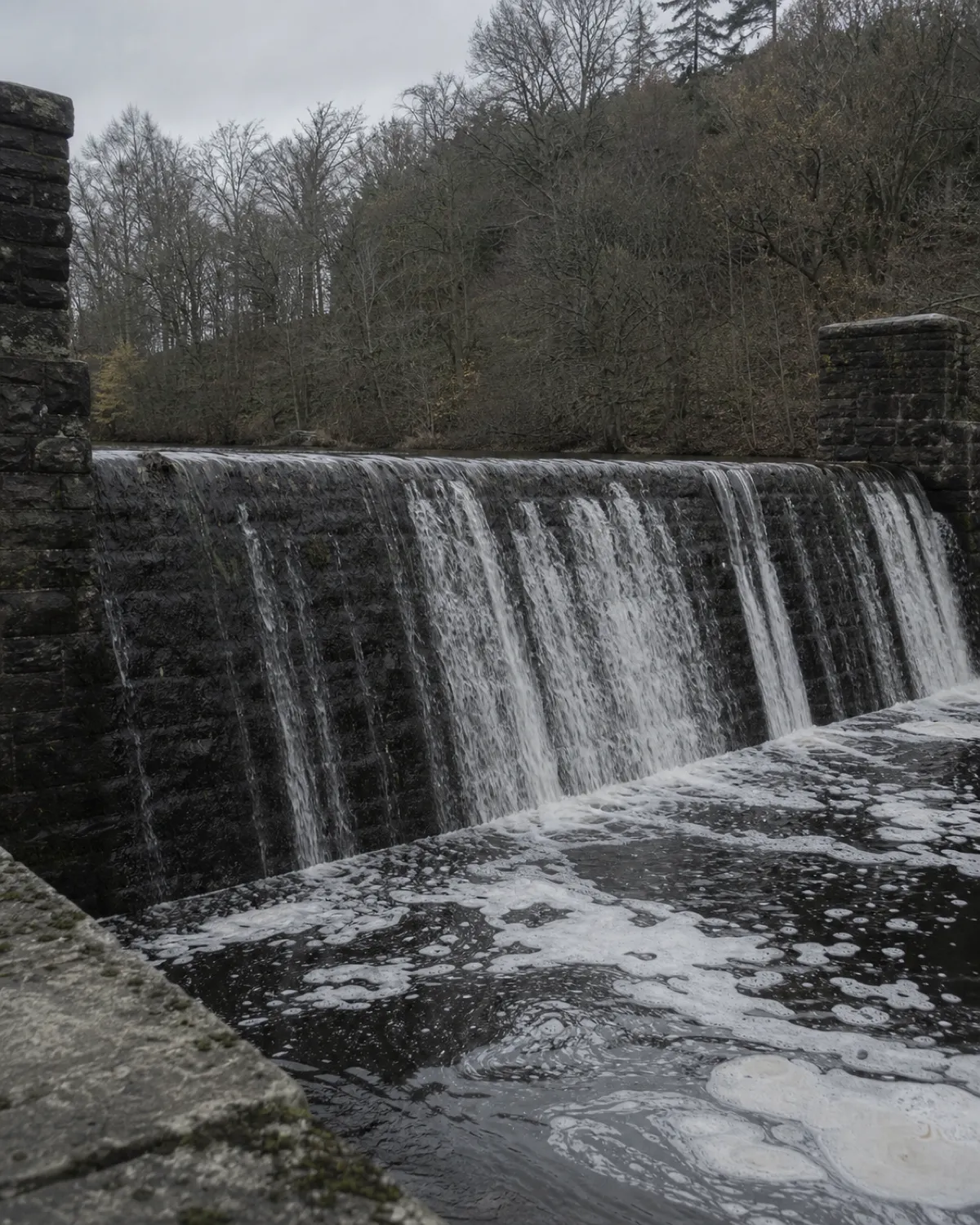
The stone weir at Ashcombe, foam collecting in the pool beneath it.
Fig. 7 The weir at Ashcombe, nine kilometres below the outfall.
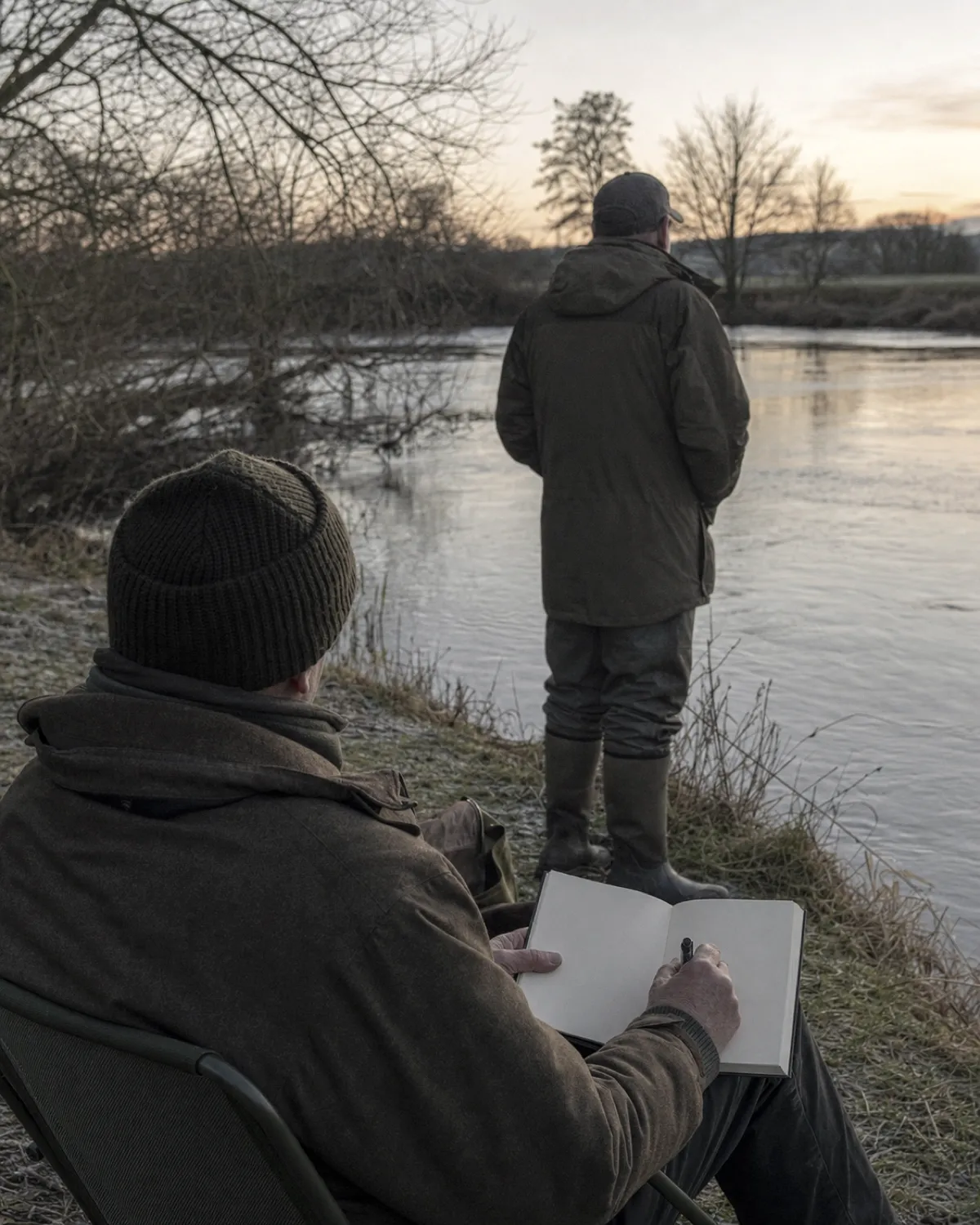
Two members of an angling club on the bank at dusk, one writing in a hardbacked log book.
Fig. 8 Sennet Angling Club members logging a fish count, 9 October 2025.
Mill Street in Ashcombe, terraced houses running down to the river at the bottom of the hill.
Fig. 9 Mill Street, Ashcombe. The river is at the bottom of every street in the town.

Step 01

The weir

Nine kilometres of river separate the pipe from the town, and the Sennet does a good deal of work in them. By the weir at Ashcombe our ammonia readings had fallen by four fifths. The bacterial counts had not: the median at the weir across nine months was 3,900 cfu/100ml, against 210 above the outfall.

Step 02

What the anglers logged

Sennet Angling Club has kept a hardbacked fish log since 1974. Its counts of brown trout on the two-mile stretch below Marlow Bank fall from a 1990s average of 61 a season to nine in 2024. Above the outfall, on water the same club fishes, the same count is stable.

We wrote to them eleven times. We were told, each time, that the site was compliant. It was compliant. That was the problem.

Danny Ubido, secretary, Sennet Angling Club

Step 03

A town that swims here

Ashcombe is 9,400 people and every street in it runs downhill to the river. Two schools swim at Coldwell Reach in the summer term. The town’s open-water club meets at the weir on Wednesday evenings from May.

None of them were ever told when the pipe was open, because there is no mechanism by which anyone would be. That is not a failure of this company. It is what the system was built to do, and it has done it here for eleven years.

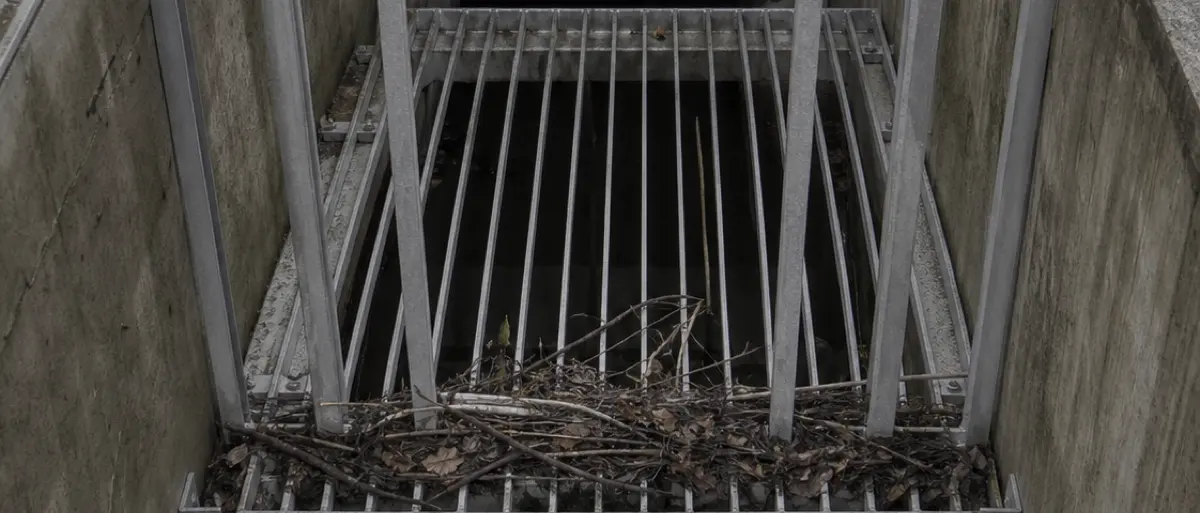
Looking down into the screen chamber above the outfall: a steel grating over standing water, debris caught against the bars.
Fig. 10 The screen chamber above the outfall. The grating is cleared on a six-weekly schedule; the job sheets record it cleared twice in 2024.

Documents

Three of the eleven

Obtained under environmental information regulations and from a source inside the company. Names of junior staff are withheld; the redactions below are ours, and they lift as you read.

Exhibit 04

Environmental permit EPR/QB3947TT · condition 3.2 · issued 4 September 2014

The operator may discharge from Outfall MB-0417 to the River Sennet during and immediately following rainfall, provided that the flow through the works is maintained at not less than 3.6 l/s and that each event is recorded in the event duration monitoring return required by condition 7.1.

No definition of “immediately following” appears anywhere in the permit or its schedules.

Exhibit 07

Internal email · Verrow Water operations · 19 August 2022, 17:44

Marlow Bank has been over the weir more or less continuously since 2 August. We are inside the 72-hour rule on paper because of the storm on the 30th, but the honest answer is the inlet pumps have been down since June.

I would rather not put the hours in writing. If anyone asks for the raw telemetry before the year end, send it to me first.

Verrow Water does not dispute the authenticity of this email. Its statement is below.

Exhibit 11

Event duration monitoring return · Marlow Bank · calendar year 2024

As filed by the operator. Rainfall is the Met Office daily total at the Ashcombe gauge.
EventStartHoursRain, 72h
2024-11814 Jun, 04:1061.40.0 mm
2024-1422 Jul, 22:55204.90.0 mm
2024-20719 Aug, 06:20311.22.4 mm
2024-31127 Nov, 13:0596.70.0 mm

Four of the 214 events filed for 2024. The full return, and our matching of it to rainfall, is published alongside this piece.

Right of reply

What Verrow Water said

“Marlow Bank has operated within the terms of its environmental permit throughout the period in question, and every discharge event has been recorded and returned to the regulator as required. The interpretation of condition 3.2 applied at the site was adopted in 2014 on engineering advice and has never been challenged by the regulator. We accept that the inlet pumping capacity at Marlow Bank has been inadequate for the catchment it now serves, and a £41m upgrade will complete in 2028.”

Verrow Water, written statement, 21 January 2026

Questions put

We sent Verrow Water 23 written questions on 8 December 2025, and a further six on 14 January 2026 after receiving Exhibit 07.

Questions answered

Nine. The company declined to answer any question about the 72-hour window, about the inlet pumps, or about who authorised the 2014 operating note.

Regulator

Confirmed in writing on 19 January 2026 that it has never agreed a 72-hour interpretation of condition 3.2, and that an enforcement assessment is open.

Method

How we reported this

Everything above can be checked. This is where each part of it came from, and what we could not establish.

  1. The returns

    All 4,118 event duration monitoring records for Marlow Bank, 2014 to 2024, obtained under the Environmental Information Regulations in three tranches between March and September 2025. We matched every event to the Met Office daily rainfall series for the Ashcombe gauge, and published both datasets and the matching script alongside this piece.

  2. The sampling

    214 samples, six points, June 2024 to March 2025, drawn to a written protocol reviewed by two freshwater ecologists before we started. Bottles were sealed and labelled on the bank, kept at 4°C, and delivered the same day under a chain-of-custody sheet to Kestrel Analytical, a UKAS-accredited laboratory paid at its standard commercial rate.

  3. The documents

    Eleven internal documents were provided by a source inside the company, who is known to this publication and whose identity is protected. Each was verified independently — against the permit register, against the returns, or by a second person who had seen it — before it was used.

  4. The people

    Thirty-one residents, anglers, swimmers, two former Verrow Water engineers and four town councillors were interviewed between January 2025 and December 2025. Everyone quoted here saw their quotations before publication and confirmed them.

  5. What we could not establish

    We could not establish who signed off the 2014 operating note; the copy we hold is unsigned and the company declined to say. We cannot attribute the fall in trout counts to the discharge alone: agricultural run-off in the same stretch is unquantified, and we say so rather than implying a link the sampling does not carry.